 Bjorn3D.com Bjorn3d.com – Satisfying Your Daily Tech Cravings Since 1996

Benchmarks
Test Rig
| Case | Thermaltake Level 10 |
| CPUs | Intel Core i7-3930 @3.2 Ghz |
| Motherboards | ASUS P79X Deluxe |
| Ram | 32 GB |
| CPU Cooler | Corsair H100 |
| Monitor | ACER – XB280HK 28″ / 1ms / DP / 4K / G-Sync |
| GPU | eVGA GTX 980 Ti SC Zotac GTX 980 AMP! OMEGA Edition |
The test-rig is slowly getting a bit old, especially the CPU and will soon be upgraded to a bit faster CPU and newer motherboard. That said it still gives us a good baseline system to test our video cards on. We should not be CPU-bound to often. The big new addition to the system for this review is a new Acer XB280HK monitor, This is a 28″ 4K monitor that supports G-Sync. A perfect companion for the new GTX 980Ti.
The Benchmarks
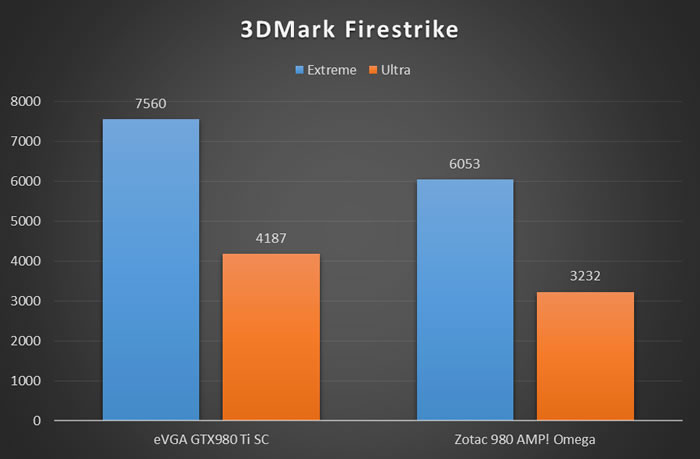
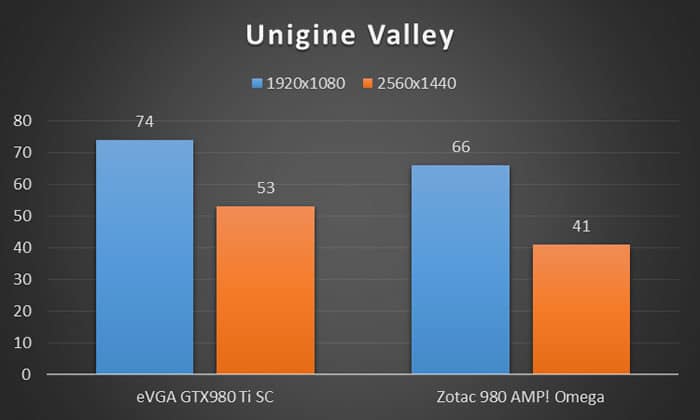
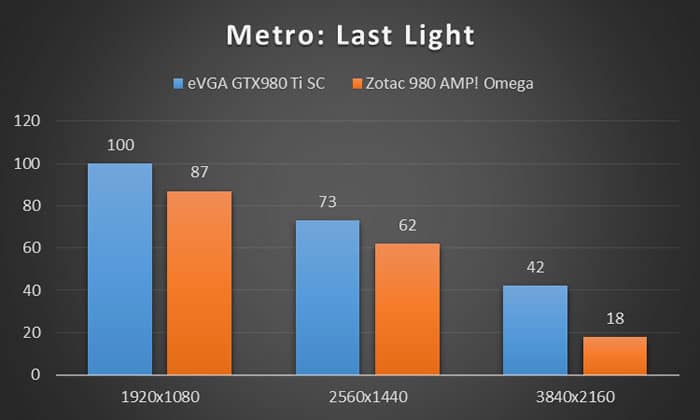
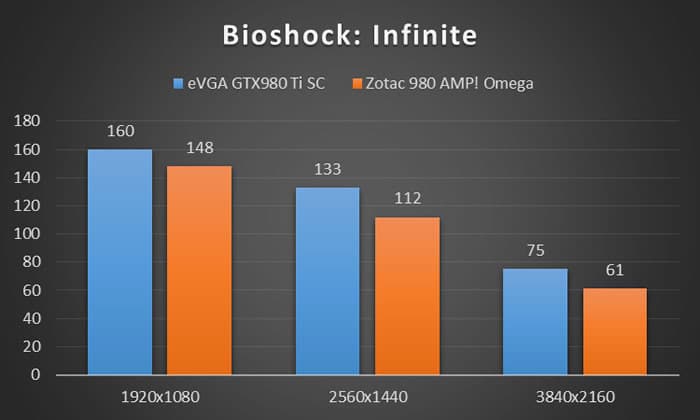
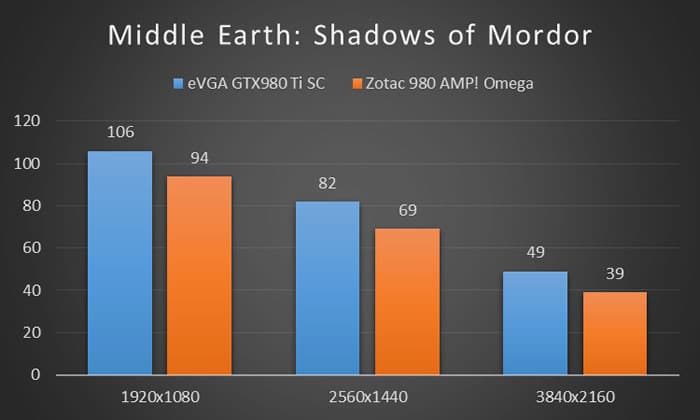
It is obvious that the eVGA GTX 980 Ti SC is a step up even compared to the overclocked Zotac AMP! Omega-edition card. How much? Let’s take a look.
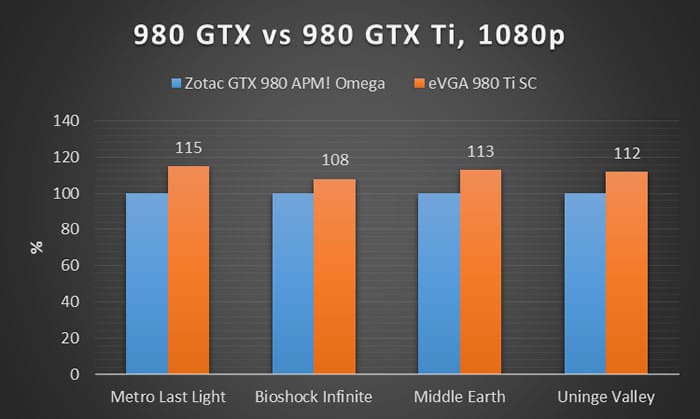
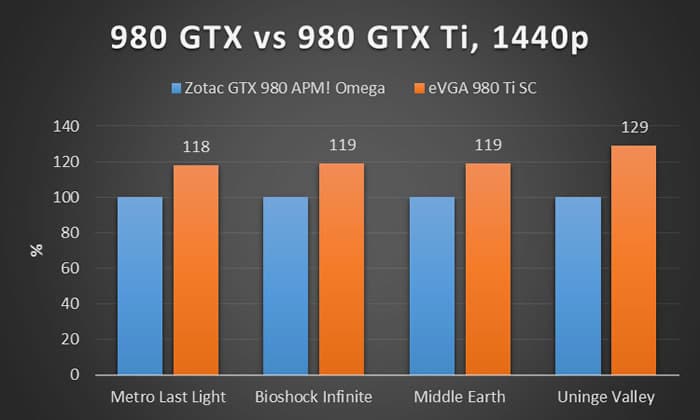
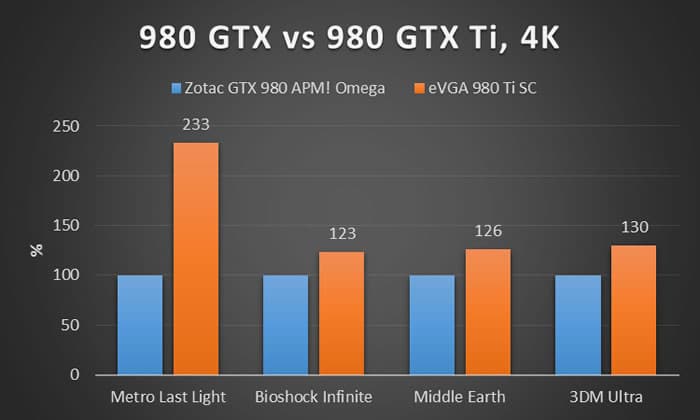
We have taken the result for the Zotac AMP! Omega-edition card and set it to 100% and then plotted the results for the eVGA GTX 980 Ti SC in relation to it. At 1080p the difference is “only” around 10-15%. Since both cards crank out high frame rates it means the only benefit might be if you want to reach 144+ fps for a 144 Hz monitor. At 1440p things start to get interesting. Now we see a 20-30% increase in performance, enough to comfortably move us further away from the average 60 fps we want to achieve for smooth gameplay. Basically we get some nice headroom so that the lower recorded frame rates are higher. At 4K we still see around 25-30% increase in performance, except for Metro:Last Light which see’s a whopping 233% increase in performance moving us from an unplayable average frame rate of 18 fps to playable 42 fps.
Remember that we are testing our games at the absolute maximum settings with both AA and AF and features turned up to max. Even with the eVGA GTX 980 Ti SC we do not hit an average frame rate of 60 fps at 4K but with just minor tweaks to the quality settings we can hit that target even with a single card. Imagine what we could do with two cards in SLI …. (hint, that test will come when we review the Zotac GTX 980 Ti and put that card and this card in SLI).



It’s always a trip to look back at hardware reviews from the era of the GTX 980 Ti—that card was such a beast for 1440p and 4K back in the day. Seeing the mention of the test rig getting a bit old reminds me of the classic struggle we’ve all faced: wondering if the CPU is finally becoming a bottleneck for the GPU.
I’m currently running a setup centered around a 10-core Xeon at 2.7GHz https://serverorbit.com/cpus-and-processors/xeon-10-core/2-7ghz. While it’s definitely not a gaming-first chip, it’s been incredibly consistent for my workstation tasks. It’s funny how, even years later, I still find myself checking if I’m “CPU-bound” during heavy multitasking, much like the author was doing with their 3930K back then. It’s a timeless concern, regardless of whether you’re chasing frame rates or render times.
Do you think we’ve reached a point where the “baseline system” is finally powerful enough that the average user doesn’t need to worry about CPU bottlenecks for at least 5 to 7 years, or is software always going to find a way to demand more?